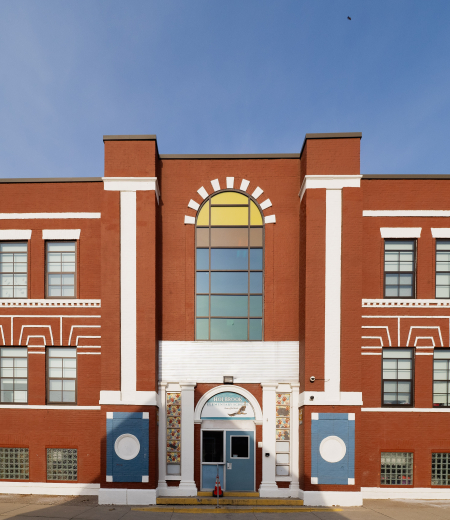
Education Facilities Built Around How Schools Actually Operate.
From Classrooms to Campuses. New Construction to Occupied Renovations.
Education facilities operate on a calendar that doesn’t bend. Summer breaks are construction windows. Academic years are occupied buildings. And every project is built for a population that includes children — which means security, safety, and disruption management aren’t afterthoughts. They’re the starting point of every plan.
Schools run on a calendar that doesn’t move. The work has to fit summer windows, stay safe around students when it can’t, and clear board approvals and public funding along the way. We already build this way on occupied, publicly funded projects across the region. Here’s what we bring to education.
Across every sector we work in — municipal, retail, medical, multi-family — we build around people who are using the building. Occupied construction is not a special circumstance for us. It’s how we operate on most of our projects.
Compressed Timelines Are What We Plan For
Our scheduling and pre-construction process is built to protect hard deadlines. We identify long-lead items early, lock in subcontractors before mobilization, and track progress daily so the schedule doesn’t slip when the window is tight.
Public Project Experience
We work with municipalities, public utilities, and government entities regularly. Prevailing wage, public bidding, multi-stakeholder communication, and detailed documentation are part of how we already operate.
Full GC Capability on Every Job
Scheduling, subcontractor management, budget control, quality assurance, and daily project oversight — all managed by a dedicated PM and backed by our full operations team. One contractor. One point of accountability.
New construction, additions, and renovations for elementary, middle, and high school facilities. Classrooms, gymnasiums, cafeterias, administrative wings, and athletic facilities built to district standards and state requirements.
02.
Higher Education Facilities
University and college buildings including academic halls, student centers, laboratory spaces, and administrative facilities. Complex mechanical and electrical systems coordinated across large-footprint structures.
03.
Early Childhood & Daycare Centers
Purpose-built facilities for early childhood education and childcare programs. Age-appropriate layouts, enhanced safety features, secure entry systems, and durable finishes built for heavy daily use.
04.
Trade & Vocational Facilities
Training centers, workshops, and technical education spaces with specialized infrastructure for hands-on learning environments. Equipment pads, heavy electrical, ventilation systems, and flexible layouts.
05.
Athletic & Recreational Facilities
Gymnasiums, field houses, locker rooms, and outdoor athletic infrastructure. Built to support both student programming and community use.
WHAT EDUCATION CONSTRUCTION REQUIRES
Schools Don’t Stop for Construction. The Plan Has to Account for That.
K-12 schools, university buildings, early childhood centers, and vocational facilities — constructed on tight timelines, around active campuses, and built to serve students for decades.
Most major school construction happens between June and August. That means compressed timelines, accelerated procurement, and a schedule built around a hard deadline that doesn’t move — the first day of school.
02.
Construction in Occupied Buildings
Renovations and additions often happen while classes are in session. Dust containment, noise management, restricted access zones, and strict separation between construction areas and student-occupied spaces are planned from day one.
03.
Student Safety & Security
Construction on an active campus requires background-checked crews, controlled access points, secure perimeters, and constant coordination with school administration. There is zero tolerance for safety lapses when students are present.
04.
Board Approvals & Public Funding
Education projects often involve school board approvals, bond-funded budgets, and public accountability. Transparent documentation, detailed cost reporting, and clear communication with multiple stakeholders are built into how we manage these projects.
05.
ADA & Code Compliance
Educational facilities carry specific accessibility, fire safety, and building code requirements that go beyond standard commercial construction. Every detail is planned and inspected to meet state and federal education facility standards.